Common Roofing Myths Debunked for Winnipeg Homeowners
Step outside on a February morning in Winnipeg and your roof has to be two things at once. It needs to shrug off minus 35 with a wind chill, then handshake the bright prairie sun that can bounce temperatures up twenty degrees by lunch. Add lake effect snow, hail that shows up like an uninvited guest in June, and wind that can tug on shingles like a toddler with a loose thread. That cocktail breeds myths the way a damp soffit breeds icicles. Let’s sort the folklore from the field-tested.
I have spent years on ladders around River Heights and Transcona, coaxing shingles to lie flat when they wanted to curl, and prying up boards that looked fine until the pry bar met mush. The most expensive surprises I see usually start with a confident sentence that begins with, “My neighbour said…” or “The last guy told me…” Consider this your friendly myth exorcism, tuned for our climate and the realities of Winnipeg roofing.
Myth 1: If it isn’t leaking, the roof is fine
A dry ceiling today can hide a wet disaster in the making. Shingles do not fail like light bulbs. They fatigue. Granules shed a little more each spring, sealant strips skip adhesion on a few tabs during a cold snap, and UV bakes the asphalt until it goes from flexible to brittle. The roof might pass a rain test in July, then fail a wind test in October.
Here is a simple truth from dozens of tear-offs: when a shingle roof here reaches its late teens, tiny cracks at the shingle corners and lifted nails around the perimeter start to show up. They are not always visible from the ground. Water migrates sideways along the underlayment, then shows up in the weirdest places. I have opened a ceiling stain above a kitchen, only to find the leak began at a bathroom vent fifty inches away.
A good annual check catches the precursors. Look for bare shingle spots at the downspout outlets, raised shingle edges on the north side, and a patch of roof that looks consistently darker after rain, which suggests the mat is taking on water. Waiting for a drip makes the fix bigger and the plywood bill steeper.
Myth 2: Dark shingles overheat the attic, so light shingles solve energy problems
Colour has an effect, but not the starring role you might think. In our climate, snow covers roofs for a solid stretch, and that white blanket neutralizes colour differences. The bigger factors are ventilation and insulation. If your attic is under-insulated, a black shingle will not cause the ice dam that forms above your living room. Heat that escapes through leaky attic bypasses, such as unsealed pot light openings, warms the underside of the sheathing. Melting snow refreezes at the eaves, and you get a row of daggers hanging over the walkway.
I have replaced jet-black shingles on a bungalow in St. Vital and installed a ridge vent and two additional soffit bays. The owner reported a cooler second floor the next summer without changing colour. If you love the look of a deep charcoal roof, pair it with balanced airflow and proper R-values. Do that, and the thermometer will forgive you.
Myth 3: Metal roofs attract lightning, and they are deafening in rain
Lightning prefers the tallest conductive path to ground, not a particular roofing material. A two-storey home with a metal roof does not become a lightning magnet simply because it shines. If you are the highest point on the block, the material is irrelevant. Proper grounding of the building and adherence to electrical codes are the safety keys.
As for noise, the roof assembly matters. Metal over solid decking with underlayment is not a barn roof over open rafters. On residential jobs in Charleswood, standing seam over plywood with synthetic underlayment produced indoor rain sound comparable to asphalt, especially once you factor in modern insulation. The real operational difference in Winnipeg is snow. Metal sheds it faster. That is a blessing if you want less snow load, and a hazard if your walkway sits under a smooth metal valley. Snow guards become part of the discussion, not an upsell but a necessity.
Myth 4: A new layer of shingles over the old ones saves money without downside
An overlay can save a day of labour and disposal fees. It can also bake trapped moisture, hide soft decking, and lock in every undulation like a photocopy of a bad haircut. I tore off a two-layer roof in North Kildonan where nail heads poked through the top layer like acne. The top shingles had never sealed right because the old granules acted like ball bearings. The OSB underneath was black at three corners.
We get wide temperature swings. Two layers move differently under heat and cold. Nails back themselves out of uneven wood. Then the wind gets involved. If budget is tight, I would rather install a quality single layer over sound decking with proper ice and water protection at the eaves than stack shingles and hope the bottom layer behaves like a gentleman.
Myth 5: Ice dams are strictly a roofing problem
Ice dams are a team sport: house, attic, roof, and weather. Roofing does its part with ice and water membrane at the eaves and in valleys. The rest depends on heat escaping from the living space and how air moves through the attic. I have crawled into attics where bathroom fans vented straight into the insulation, fogging rafters with every shower. The frost looks like powdered sugar in January. In March, it melts, which makes stains on the top floor walls even though the roof never technically leaked.
If you are fighting recurring ice dams, tackle the causes in a sequence that holds up over many winters:
- Air seal the attic bypasses, including around chimneys, plumbing stacks, and light fixtures, then top up insulation to the recommended levels.
- Confirm that soffit intakes are open, not choked by old insulation or painted-over perforations.
- Make sure you have continuous exhaust at the ridge or a properly sized set of roof vents that match the intake.
- Extend bathroom and kitchen exhaust ducts to the exterior with insulated, sealed pipes, not flexible hose thrown over the insulation.
- Use heat cables only as a last resort, and install them correctly, because they treat a symptom and can mask deeper issues.
That small list does more to tame ice than any miracle shingle ever made.
Myth 6: Attic ventilation wastes heat in winter
I hear this one every December: close the vents to keep the heat in. The attic is not supposed to be a warm room. It is a buffer. When the attic runs near outdoor temperature, snow stays frozen on the roof except where sun or house design naturally warms it. Moisture from living spaces that migrates up through imperfect air barriers gets flushed out rather than condensing on the sheathing, which then grows frost and promotes mold.
Balanced ventilation is the trick. Soffit intake plus continuous ridge or a calculated number of static vents, sized to the attic volume and geometry. Dumping a whirlybird on top without enough intake can depressurize the attic and pull heated air from the house. That, ironically, causes the very heat loss people wanted to avoid.
Myth 7: “Lifetime” shingles last a lifetime in Winnipeg
Check the fine print. Lifetime often means the expected life of the original owner under standard conditions, then a prorated schedule after a set number of years. Standard conditions rarely describe Portage and Main in January. Wind ratings vary by model, and many warranties require specific nails per shingle, placement within a defined zone, and starter strips that actually engage the sealant.
Realistic numbers help. On typical architectural asphalt shingles, expect 18 to 25 years here if you install them right, ventilate well, and keep branches off the roof. I have seen 30, but those were steep pitches with zero shade and excellent airflow. Flat, tree-covered, or poorly ventilated sections can age out in 12 to 15. A warranty you cannot make a claim on is not a plan. A well built system is.
Myth 8: Roofing work should only happen in spring
Spring is nice for crews, but the roof does not read calendars. The bigger constraints are wind, precipitation, and the temperature required for the shingle’s sealant to activate. Most modern shingles self-seal when the sun hits them a few times even if the air is cool. In late fall, we hand-seal critical tabs with approved adhesive to make sure the leading edges are not waiting for May.
I have reroofed on bright days in November where the deck was dry by 10 a.m. And we kept bundles inside the truck until needed so they stayed workable. I have Great site also turned down a July job because the gusts were pushing 70 km/h and you could feel the deck flex under your boots. The rule is simple: pick days when the surface is dry, the wind is manageable, and the forecast lets sealant set before the next storm. Good planning beats a date on the calendar.
Myth 9: Hail damage is obvious
Sometimes hail carves craters you can spot from the curb. Other times, the mat fracture hides under intact granules. Days after a storm, look at soft metals first. Dings on downspouts, vents, and flashing confirm impact even when shingles look fine. On architectural shingles, impact can crush granules into the asphalt. In a month or two, those spots shed granules faster and create dark pockmarks.
During the 2 to 5 centimetre hail events we see every few years, I use a simple field approach. Inspect slopes that faced the storm. Check ridge caps, which take hits head-on. Lift a few tabs gently to look for underlying cracks near the nail line. If you suspect damage, call an experienced roofer before the insurance adjuster. A documented inspection with photos makes the conversation with your insurer easier. Policies often have claim timelines, and some require temporary repairs to prevent further damage, so a quick assessment pays off.
Myth 10: Flat roofs always leak
Flat is a word we use for anything under about a 2 in 12 pitch. Most of those roofs are not flat. They are supposed to have subtle slopes that move water to drains, scuppers, or gutters. Problems come when the slope is wrong or the drains clog. Modern membranes, whether TPO, PVC, or EPDM, perform well here if seams are properly welded or adhered and edge details are done right. I maintain commercial flats downtown where the only issue each year is a leaf dam in the autumn. Clear that and the system stays bone dry.
On residential flats over kitchens and sunrooms, tapered insulation is worth every penny. It forms the slope the original carpenter forgot. Pair that with a clean-out plan for the drains twice a year, and you will not spend winter placing pots under the skylight.
Myth 11: Drip edge is optional if you have gutters
Gutters catch water that has already left the roof. Drip edge controls where the water leaves. It protects the plywood or OSB at the eaves, keeps wind-driven rain from curling back onto the fascia, and helps ice and water membrane terminate cleanly. On tear-offs, I often find rot concentrated in the first eight inches above the gutters on homes without proper edge metal. You would not skip priming a wall before paint. Do not skip the simple metal that guards the most vulnerable line on the house.
Myth 12: Bigger roof vents fix poor ventilation
Oversizing exhaust without matching intake just creates a thief in your attic. The big vent steals air from the path of least resistance, which can be your living space through light fixtures and attic hatches. That pulls moisture and heat into the attic and worsens the problem you were trying to solve.
Balance matters. Calculate net free area. In practical terms, that looks like continuous soffit vents that are actually open to the attic, paired with a ridge vent the same length as the ridge, or an equivalent number of static vents placed high on the slope. Mixing vent types at the top, like using a ridge vent plus turbines, can cause short-circuiting where air exits one vent and enters another nearby instead of flushing the attic.
Myth 13: Any contractor with a ladder and a nail gun can roof your house
Speed covers mistakes for a season. Then Winnipeg’s winter peels back the curtain. The smartest homeowners I work with do not shop price alone. They shop the small tells that predict how the crew will treat the details no one sees from the sidewalk.
Here is a tight checklist I share with friends who ask how to pick well:
- Ask to see photos of their own past work that show underlayment, ice and water placement, and flashing details, not just shingle glamour shots.
- Confirm they will replace rotten decking by sheet, not patch with shingle scraps or caulking.
- Get the ventilation plan in writing, including intake and exhaust calculations, not a shrug and a box of vents on the truck.
- Check that they use manufacturer approved nails, quantities, and starter strips to keep your warranty valid.
- Verify liability insurance and workers’ compensation coverage so you are not the safety net if someone slips.
A contractor who handles those five with ease will likely do the fussy work well, like weaving valleys correctly and setting pipe boots under the right layer.
The Winnipeg factor: wind, sun, and the freeze - thaw yo-yo
Local context matters more than brand posters. We get chin-splitting cold, dry sunny days, and sudden thaws that turn ruts into puddles by noon. Shingles expand and contract. Sealant strips that held tight yesterday can release on the windward side if they never fully activated after installation. That is why I lightly hand seal leading edges on north and west exposures late in the season. It is also why I ask homeowners to trim back branches that brush the roof. A tree that kisses the shingles in July scrubs off granules in January when the wind pushes it like a broom.
UV is the quiet villain. A south-facing slope in Fort Garry can age twice as fast as a shaded north slope on the same house. When you budget for replacement, plan for slope-by-slope reality, not a single number. Replacing a fried south slope two years before the rest is cheaper than living with granule drifts clogging the gutters after every thunderstorm.
Wind here is not a rumor. Gusts over 80 km/h show up often enough that I treat the nail line as gospel. Miss the line and the shingle’s wind rating is a wish. I have been back to fix roofs installed by others where every third shingle on the west slope had lifted tabs. The nails were two centimeters high. That tiny miss lets a prairie gust flip the edge, the seal breaks, and the fluttering edge becomes a sail.
Warranties, fine print, and what you can control
Manufacturer warranties run to many pages. Some are generous, others are a maze of exclusions. Most share a theme. They warrant against manufacturing defects under correct installation and ventilation, and they prorate coverage over time. They do not pay for poor flashing at your chimney or a bathroom fan blowing into the attic. Workmanship warranties, offered by the installer, cover the details and are only as good as the company’s stability.
What you can control is simple. Hire for detail. Sign a scope that specifies materials by brand and line, underlayment type, ice and water coverage extents, drip edge, flashing approach, and ventilation. Keep documentation of your attic insulation and airflow improvements. Register the roof with the manufacturer if they offer extended coverage when installed by certified contractors. You would be surprised how many claims are denied because no one can prove the system met the required components.
Maintenance that pays back
Our climate punishes neglect. A half hour twice a year yields outsized returns. After leaf fall, clear gutters and downspouts. While you are up there, look at the shingle surface below every roof penetration. If you see a crescent of granules collecting, that penetration might be shedding faster than its neighbours, which hints at a flashing or sealant issue. In spring, once thaw arrives, walk the perimeter and study the eaves. Stains running down the fascia usually mean water has crept behind the gutter, a job for drip edge or gutter flashing.
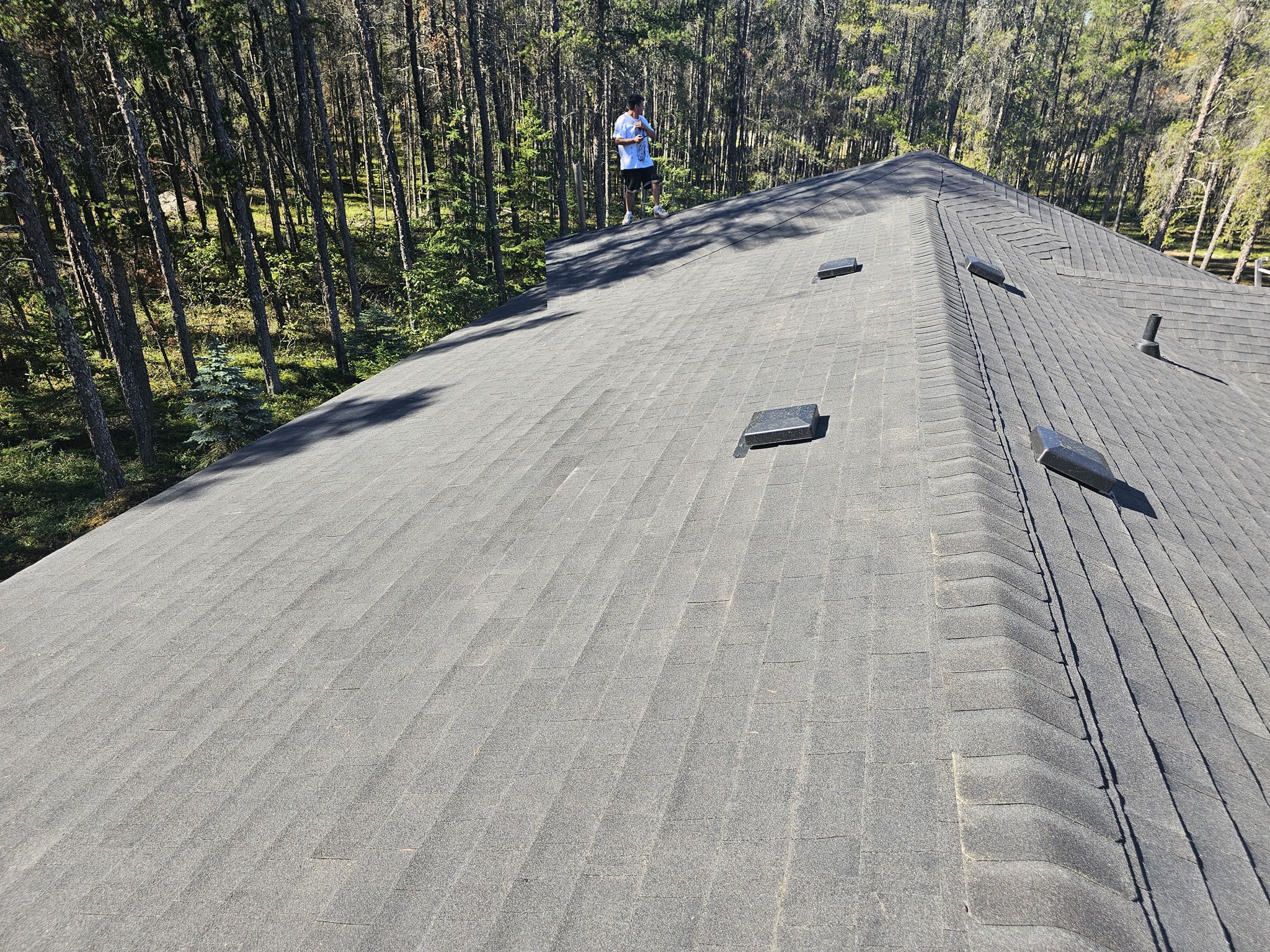
Inside, a peek into the attic on a cold day reveals more than a thousand outside glances. Use a flashlight. If the nails look frosted, your attic is holding moisture. If the insulation looks like someone crawled through it and mashed pathways at the eaves, warm house air is burrowing to the perimeter. A bag of baffles and an afternoon can restore airflow and extend shingle life a surprising amount.
When repair beats replacement, and when it does not
I am generous with repairs when the roof has isolated issues. A lifted ridge cap on a garage in Elmwood, a few popped nails along a south edge, or a cracked plumbing boot can all be fixed cleanly. Once we hit widespread granule loss, curled shingle edges across a whole slope, or soft decking in multiple places, repair becomes a bandage on a broken leg. Wind and hail do not spread damage evenly. Some slopes survive, others take a beating. Look slope by slope, then decide.
During that decision, consider the underlayment story. Older roofs might have a felt underlayment that tears when lifted for flashing work. I have started repairs that turned into replacements because the felt disintegrated when we lifted tabs. It is not a scam to change course midstream when the substrate fails to cooperate. It is weather reality and old materials showing their age.
What “good” looks like on the day of installation
A tidy jobsite often predicts a tidy roof. Crews that tarp gardens and stage tear-off debris usually care about nail lines and flashing order. Watch how they treat penetrations. The right sequence matters: underlayment first, then ice and water at the eaves and valleys, then starter, then shingles laid to course with proper exposure, step flashing interlaced with siding at walls, not slapped on top and caulked. Caulking is not a primary water barrier. It is the makeup, not the bone structure.
On a Winnipeg job in the West End, we paused an hour to let a quick squall pass rather than rush valley shingles in a drizzle. Wet underlayment looks the same as dry on camera, but it changes how sealants bond. That one hour made the difference between a valley that lasts twenty years and one that peels in five.
A practical word on timing and booking
Roofers book up fast after a major hailstorm, and prices can rise with demand. If your roof is aging out, plan in the off years. Get inspections in late summer before fall rains. If a storm hits, call your preferred contractor immediately even if you are not certain you have damage. A brief inspection can put you in the queue before the deluge of panicked calls. Reputable winnipeg roofing outfits keep emergency crews for temporary tarps and make sure you are watertight while paperwork catches up.
Parting advice that actually helps
Roofs are systems, not skins. When you treat them that way, myths lose power. Hire someone who talks about airflow and edge metal with the same enthusiasm they bring to shingle colours. Ask to see the underlayment before it disappears forever. Stash the contractor’s info and your warranty papers where you keep furnace service records. If something feels off during a blowy March night, call. The sooner a professional sees it, the smaller the fix.
And one last small, unglamorous habit that pays: after a heavy snow, if there is a weirdly bare patch on one slope while everything else is frosted, make a mental note. That patch is warmer. Warmth leaves clues. Follow them when the weather turns friendly. Your roof will thank you with silence, and silence is a roof’s finest compliment.
Canadian Crafted Roofing And Renovations
314 Bond St, Winnipeg, MB R2C 1X5
+12042217663
https://cancrafted.ca/
Facebook